Syncing Across Screens: Data Protocols Driving Continuity in UK Portable Casino Software
Olivia Walter · Nov 9, 2026
Syncing Across Screens: Data Protocols Driving Continuity in UK Portable Casino Software
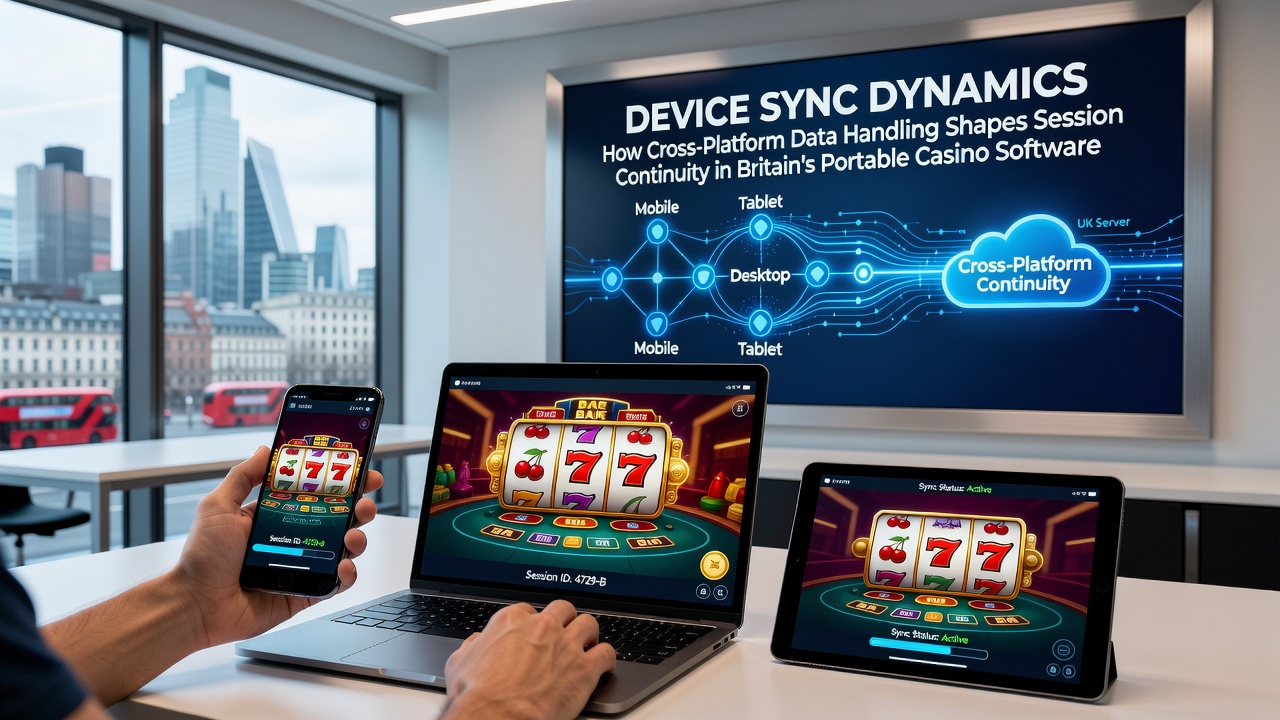
Device synchronization in UK mobile casino applications relies on backend servers that store session states in real time, allowing players to pause activity on one device and resume without interruption on another. Developers implement these systems through APIs that push updates on bets, balances, and game progress to centralized databases while encryption protocols protect the transmitted information during transfers.
Core Mechanisms Behind Cross-Platform Continuity
Cloud infrastructure forms the backbone of these operations, where session tokens generated at login track user activity across operating systems such as iOS and Android. Data packets containing game states travel via secure channels to remote servers, and upon reconnection the system retrieves the latest record to restore the exact point of interruption. Research from the GSMA indicates that mobile network advancements in 2025 reduced average latency for such transfers by 18 percent, enabling smoother handoffs during commutes or device switches.
Developers further refine continuity by caching partial data locally on devices while maintaining primary records in the cloud, which minimizes loading times when users switch from tablets to phones. This hybrid approach combines local storage for immediate access with server-side validation to prevent discrepancies in account balances or bonus progress.
Data Handling Practices in Portable Casino Environments
Cross-platform handling requires standardized data formats so that slot reels, card tables, and live dealer streams align regardless of screen size or operating system. Engineers apply compression algorithms to reduce payload sizes, which proves essential when users operate on variable mobile data connections. According to a 2026 report from the Australian Communications and Media Authority, optimized data packets in entertainment applications cut bandwidth usage by up to 35 percent without compromising visual fidelity.
Security layers integrate token-based authentication that expires after each sync cycle, while biometric verification on newer devices adds an extra checkpoint before resuming sessions. Observers note that these measures address regulatory expectations around responsible play by logging every device transition for audit purposes.

November 2026 has seen increased adoption of edge computing nodes in UK networks, which process sync requests closer to the user and shorten the time between device handoffs. This development builds on earlier 5G rollouts and allows applications to maintain live dealer connections even when players move between Wi-Fi and cellular networks.
Impact on User Sessions and Platform Performance
Session continuity directly influences retention metrics because uninterrupted play reduces friction during device changes. Platforms track metrics such as average sync success rates and time-to-resume, then adjust server allocations accordingly. One industry analysis from the University of Toronto’s gaming technology lab found that applications achieving sub-two-second sync times recorded 22 percent higher daily active user figures compared with slower counterparts.
Challenges persist around network variability and device-specific rendering differences, yet developers counter these through fallback protocols that degrade graphics quality temporarily rather than dropping the session entirely. Such adaptive techniques keep gameplay accessible while preserving core data integrity across platforms.
Future Directions in Multi-Device Casino Technology
Emerging standards around open banking integration may soon allow balance updates to sync alongside game states, creating a more unified financial layer within portable applications. Industry groups continue to explore blockchain elements for immutable session logs, though widespread implementation remains limited to pilot programs as of late 2026.
Regulatory bodies in multiple regions monitor these technical evolutions to ensure consumer protections scale alongside new synchronization capabilities. Continued investment in backend infrastructure suggests that cross-platform handling will grow more robust, supporting longer uninterrupted sessions regardless of device ecosystem.
Conclusion
Device synchronization protocols in UK portable casino software center on reliable cloud storage, efficient data transfer, and adaptive security measures that together preserve session continuity. As network technologies advance and standardization efforts progress, platforms maintain consistent player experiences across devices while meeting operational and compliance requirements.