How Mobile App Alerts Affect Session Lengths in Live Dealer Games
Olivia Walter · Aug 24, 2026
How Mobile App Alerts Affect Session Lengths in Live Dealer Games
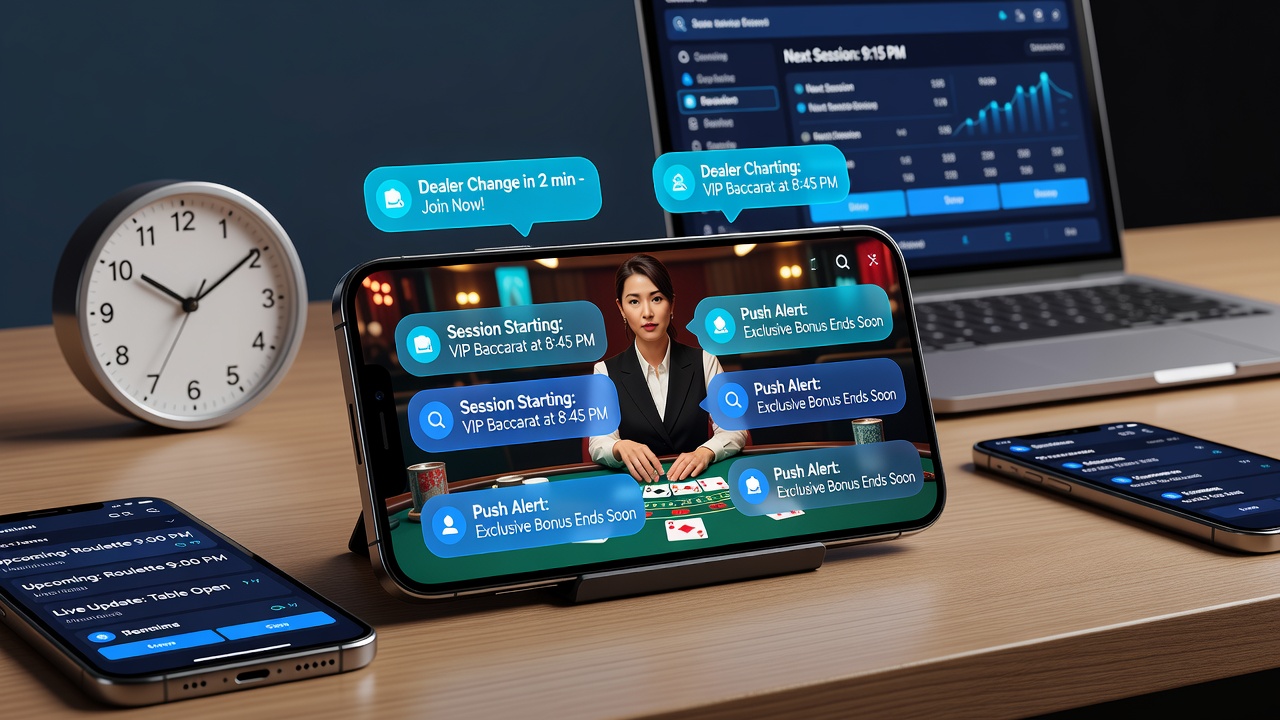
Push notifications from casino applications on smartphones have become central to how live dealer enthusiasts organize their play periods, with timing signals prompting logins at specific hours and encouraging extensions once sessions begin. Data from multiple markets shows these alerts often arrive during peak commute windows or evening hours, aligning with patterns observed in mobile usage reports.
Notification Triggers and Initial Session Starts
Live dealer platforms send alerts about table openings, dealer changes, and limited-time promotions, and these messages frequently coincide with moments when users check their devices after work or during breaks. Research from industry analysts indicates that sessions initiated through notification clicks tend to begin 15 to 30 minutes earlier than those started through direct app launches without prompts. Observers note that the content of the alert matters, since messages highlighting specific game types or dealer availability draw quicker responses than generic reminders.
Timing also varies by device operating system, with iOS users receiving notifications that include preview text more often than Android users in certain regions. A 2025 report compiled by researchers at the University of Nevada, Las Vegas, tracked thousands of mobile sessions and found that alerts containing countdown timers increased the likelihood of immediate engagement by nearly 40 percent compared with static messages.
Extending Active Play Periods Through Follow-Up Alerts
Once a session starts, subsequent notifications about table limits, bonus rounds, or dealer shifts help sustain activity for longer stretches. App developers design these follow-up messages to appear at intervals that match typical attention spans, often every 10 to 15 minutes during live games. Figures from platform analytics reveal that users who receive at least two in-session alerts stay connected an average of 22 minutes longer than those who disable notifications entirely.
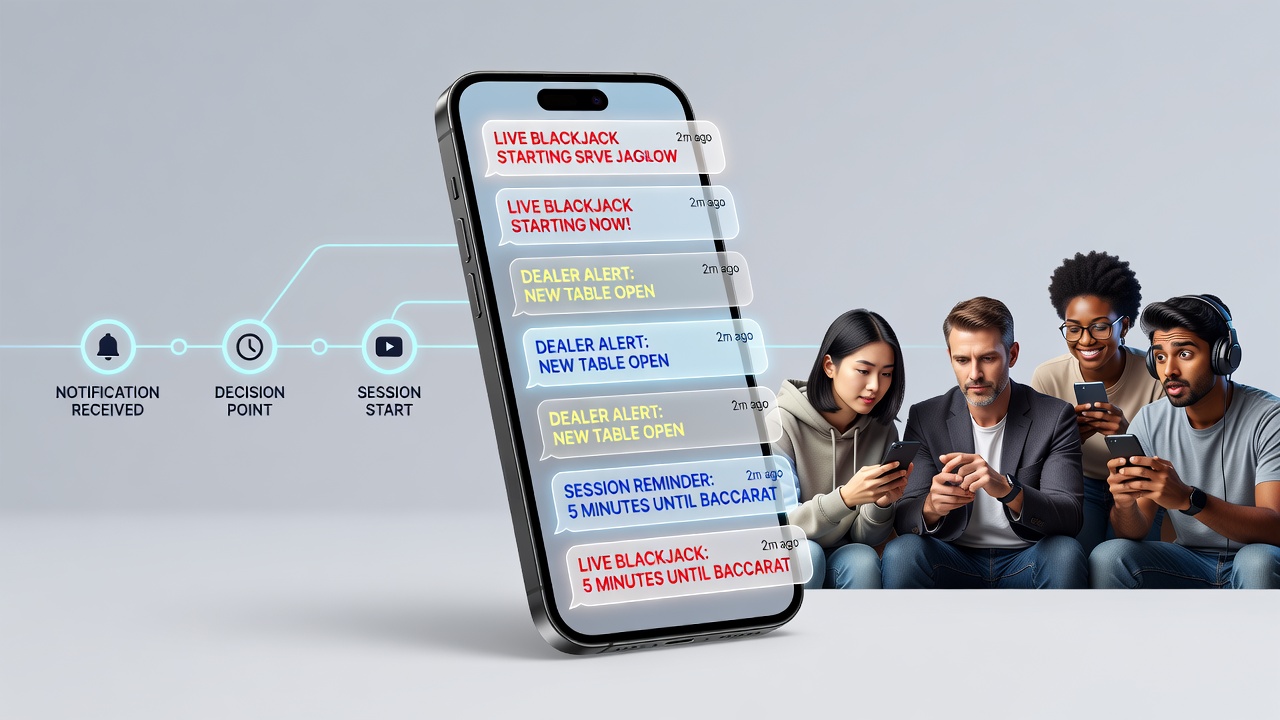
Canadian regulatory data released in early 2026 highlighted similar trends, noting that notifications tied to progressive jackpot updates produced measurable spikes in session duration across tested applications. Those who've studied user behavior point out that the balance between helpful reminders and excessive alerts remains delicate, since repeated interruptions can lead some players to mute the feature altogether.
Regional Patterns and Device Data in 2026
August 2026 brought updated usage statistics from several international sources, including a European gaming association report that documented higher notification response rates during afternoon hours in southern European markets compared with northern ones. Smartphone telemetry collected across multiple apps showed that live dealer fans on Android devices responded more readily to vibration-enabled alerts, while iOS users favored badge count updates that appeared on the home screen.
Industry organizations such as the American Gaming Association have published summaries indicating that notification-driven sessions account for roughly one-third of total live dealer mobile playtime in tracked jurisdictions. These patterns emerge because alerts often reference real-time table conditions, giving users concrete reasons to check in rather than relying on memory or routine.
Technical Delivery and User Controls
App developers rely on push notification services that allow precise scheduling based on user location, time zones, and previous activity logs. Features such as do-not-disturb integration and customizable alert categories give players the ability to shape when they receive information about live tables. Studies from academic sources in Australia have examined how these controls influence overall session timing, revealing that users who set quiet hours tend to cluster their play into fewer but more concentrated blocks.
Developers continue to refine delivery algorithms so that alerts arrive when engagement metrics suggest the highest probability of response, drawing on aggregated data rather than individual tracking alone. This approach connects notification timing directly to broader usage rhythms observed across smartphone networks.
Conclusion
App notifications serve as timing mechanisms that both initiate and prolong live dealer sessions on smartphones, with measurable effects documented across different regions and device types. Available data shows consistent correlations between alert content, delivery timing, and session length, while user controls offer ways to adjust these influences. As platforms refine their systems, the relationship between notifications and play patterns remains a key area tracked by researchers and operators alike.