Cross-Platform Synchronization in Multiplayer Mobile Slot Tournaments
Kai Perry · Aug 31, 2026
Cross-Platform Synchronization in Multiplayer Mobile Slot Tournaments
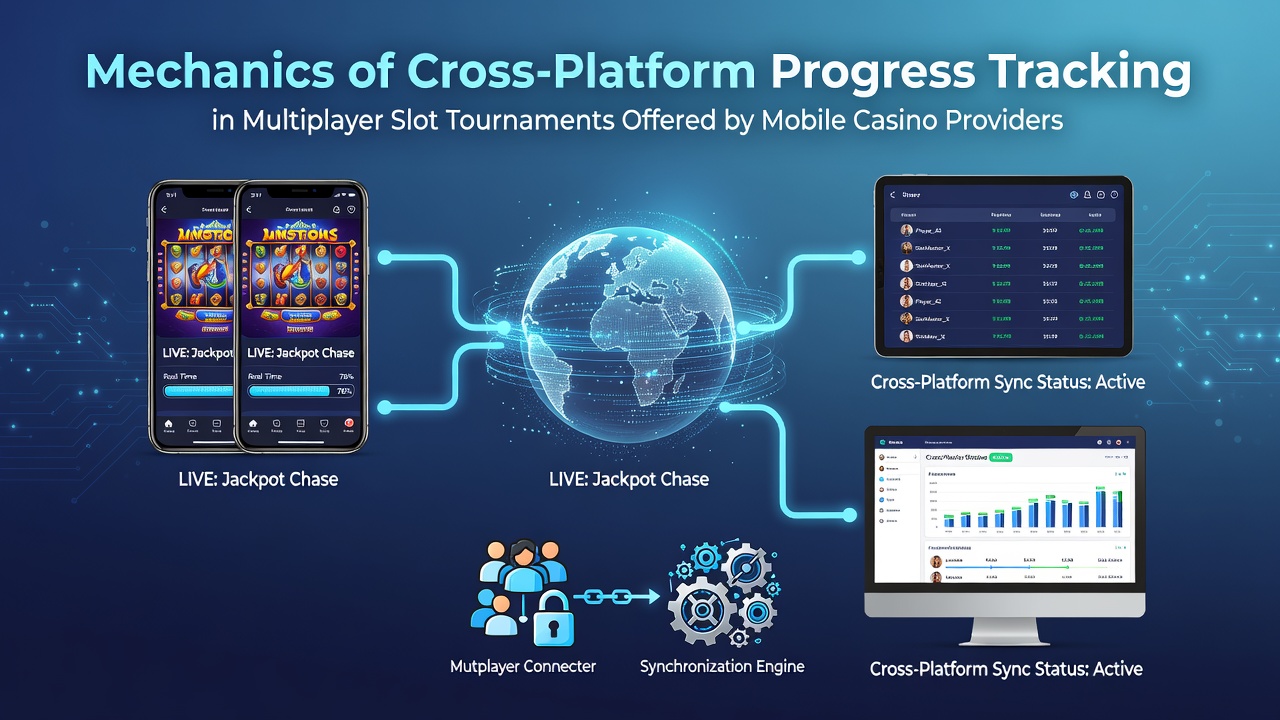
Multiplayer slot tournaments on mobile platforms rely on centralized account systems that record player actions across devices, and these systems update in real time through server-side databases that store session data, spin counts, and leaderboard positions. Providers maintain user profiles on cloud infrastructure so that progress made on one phone appears immediately when the same account logs in elsewhere, and this approach eliminates the need for manual transfers or local storage of tournament metrics.
Core Account and Server Architecture
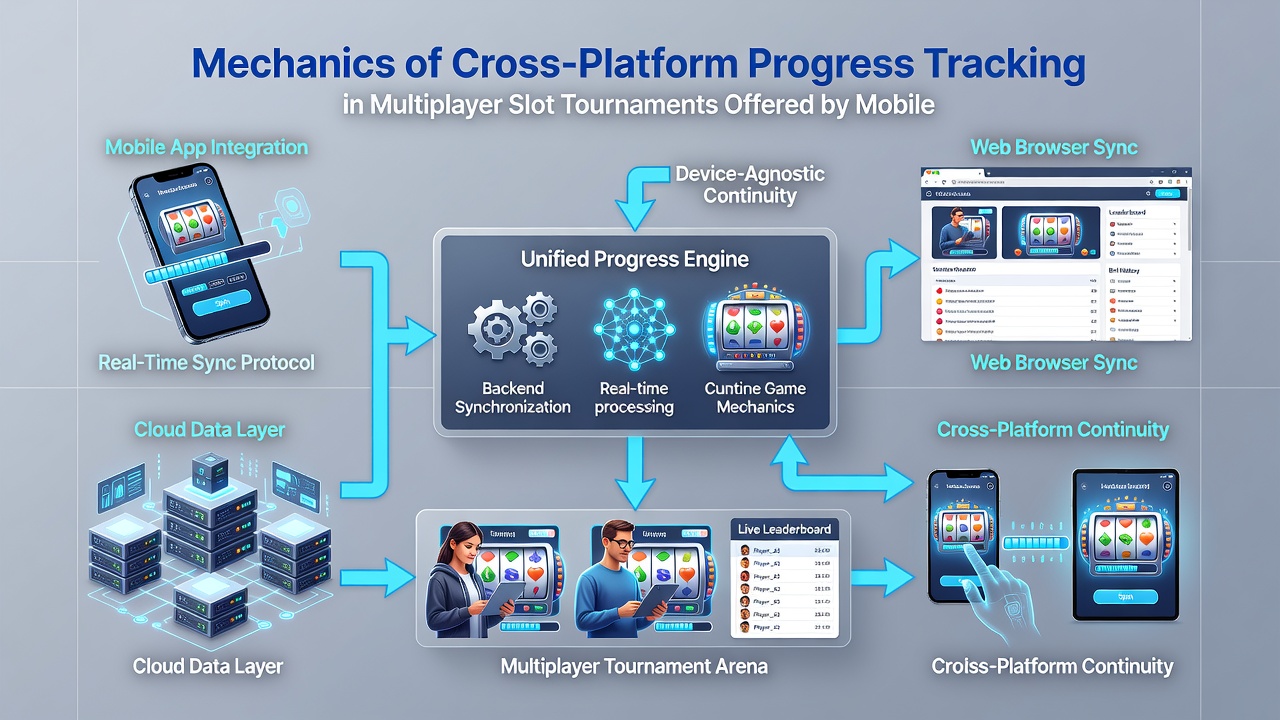
Each participant registers with a unique identifier tied to an email or phone number, after which the provider assigns a persistent profile that lives on remote servers rather than on individual handsets. When a player joins a tournament, the mobile app queries the central database for current standings, remaining spins, and time left, then pushes new results back to the same database after every round. This two-way exchange keeps all connected devices aligned, and observers note that latency stays low because most providers use dedicated gaming servers optimized for high-frequency updates instead of general-purpose cloud instances.
Device detection routines run in the background to adjust data packets for screen size and operating system, so an Android user and an iOS user see identical leaderboard information even though their apps render it differently. Research from the University of Nevada, Las Vegas gaming technology program shows that standardized JSON payloads and versioned APIs allow this compatibility without forcing players to install separate clients for each platform.
Real-Time Data Protocols and Conflict Resolution
Providers rely on WebSocket connections that stay open during active play, sending incremental updates for each spin outcome rather than full data dumps after every round. When two devices attempt to submit results for the same account at nearly the same moment, the server applies timestamp-based reconciliation rules that accept the earliest valid entry and discard duplicates, and this method prevents inflated scores that could arise from network delays. In August 2026 several major platforms introduced atomic transaction logging that records every state change with millisecond precision, further reducing the chance of progress desync during peak tournament hours.
Security Layers Protecting Tournament Data
Encrypted channels protect every data packet between app and server, while token-based authentication replaces static passwords for each session to limit exposure if a device is lost or compromised. Audit logs maintained by the provider record every login, spin submission, and leaderboard query, and regulators in multiple jurisdictions require these logs to remain accessible for at least 90 days. One study published by the European Gaming and Betting Association found that end-to-end encryption combined with device fingerprinting reduced unauthorized access attempts by more than 40 percent across monitored tournament systems in the preceding year.
Handling Offline Periods and Reconnection
Players sometimes lose connectivity during commutes or travel, yet the tournament must continue without penalizing them for temporary drops. The standard solution caches the last confirmed server state locally, then compares it against the central record upon reconnection and applies any missed updates automatically. If the local cache and server diverge beyond a set threshold, the system forces a full resync that may pause the player for a short verification step, and this safeguard maintains fairness for everyone else still competing.
Future Developments in Cross-Platform Tracking
Developers continue testing edge-computing nodes placed closer to regional mobile networks so that response times drop below 50 milliseconds even during large-scale events. These nodes mirror the master database and handle routine queries locally before pushing aggregated results back to the central cluster, and early trials indicate that the approach cuts bandwidth costs while preserving the single source of truth required for accurate leaderboards. As more providers adopt this distributed model, the mechanics of cross-platform progress tracking will likely become even more resilient to regional outages and device switches.
Conclusion
The combination of persistent cloud profiles, real-time protocols, conflict-resolution logic, and layered security forms the backbone of progress tracking in mobile slot tournaments, allowing seamless play across phones and tablets without compromising competitive integrity. Continued refinements in August 2026 and beyond point toward faster, more distributed architectures that keep pace with growing participation numbers while meeting regulatory demands for transparent record-keeping.