Battery Optimization Tactics for Sustained Live Dealer Play on Handheld Devices
Rafael Wagner · Aug 17, 2026

Battery Optimization Tactics for Sustained Live Dealer Play on Handheld Devices
Portable gambling platforms have grown more demanding as live dealer sessions extend into hours of continuous video streaming and real-time interaction, and developers along with device manufacturers continue refining power management tools to address these loads. Data from industry reports shows that video encoding and constant network handshakes account for the largest share of energy use during extended play, while background processes and screen brightness add secondary drains that compound over time.
Core Causes of Rapid Battery Depletion
Live dealer applications rely on high-definition video feeds and low-latency connections that keep both the processor and radio components active without pause, which leads researchers to identify these elements as primary culprits behind shortened runtime. Observers note that adaptive bitrate streaming helps moderate consumption when network conditions vary, yet many sessions still push devices toward thermal throttling once internal temperatures rise. Studies conducted on popular mobile operating systems reveal that screen refresh rates above 90 Hz combined with always-on location services can reduce available power by up to 35 percent during a two-hour session, according to measurements shared by hardware testing labs.
Device-Level Adjustments That Extend Runtime
Users who lower screen brightness to 40-50 percent and enable dark mode interfaces often see measurable gains because OLED panels consume less energy when displaying darker content. Enabling airplane mode while maintaining a stable Wi-Fi connection eliminates unnecessary cellular scanning, and those adjustments alone have allowed extended sessions to stretch beyond three hours on mid-range hardware released in 2025. Power-saving modes built into current operating systems further throttle background app refresh and limit processor clock speeds, though they require careful calibration so that video quality and responsiveness remain acceptable during dealer interactions.
Application-Specific Features and Developer Tools
Application developers now integrate granular battery monitoring that alerts players when estimated remaining time drops below a chosen threshold, and these notifications draw from real-time telemetry collected during live sessions. Several platforms released updates in August 2026 that introduced optional low-data modes which reduce video resolution dynamically while preserving audio clarity and betting functionality. Code optimizations such as efficient WebRTC implementations and background suspension of non-essential animations have cut average consumption by noticeable margins, according to benchmarks published by independent testing organizations.
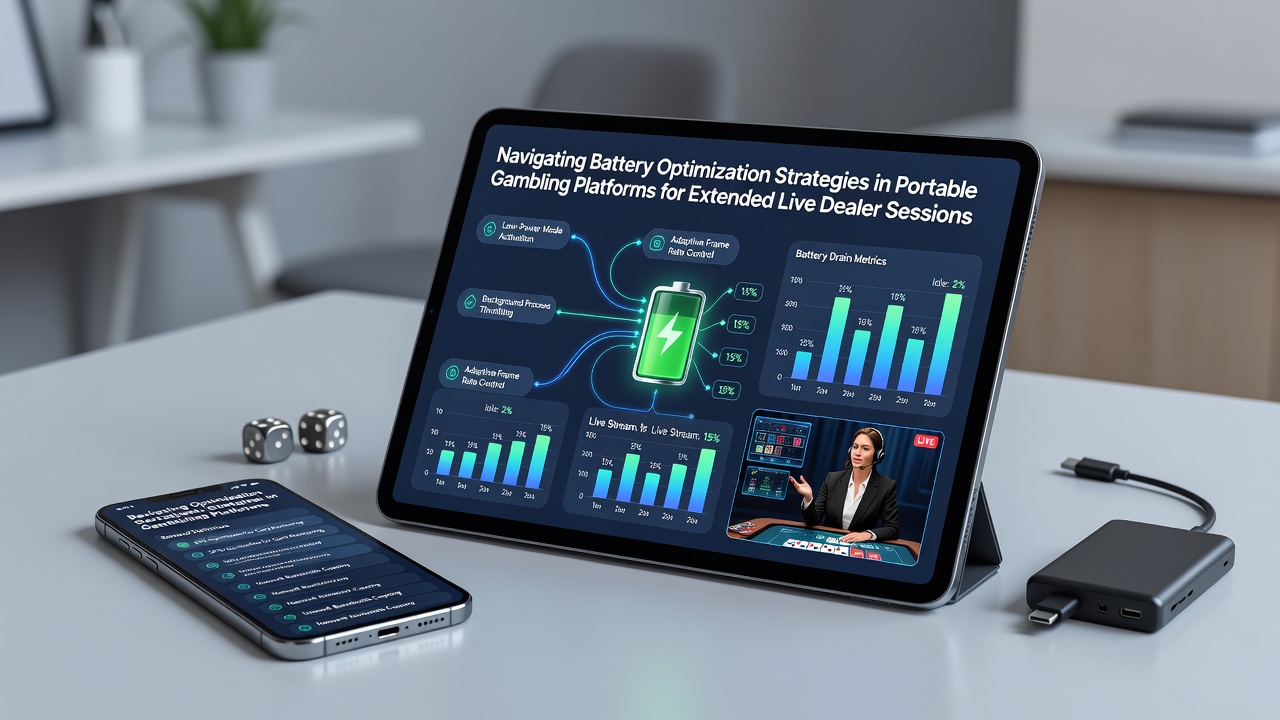
Third-party battery analysis tools allow detailed tracking of which components draw the most power during specific games, giving users data to decide whether to switch to alternative titles or adjust settings mid-session. Those who schedule automatic brightness changes tied to time of day report more consistent performance across longer play periods.
Network and Connectivity Strategies
Stable Wi-Fi connections generally outperform mobile data for energy efficiency because they avoid repeated tower handoffs, and players who lock to 5 GHz bands rather than switching between frequencies often extend battery life by several percentage points. Observers have documented cases where VPN usage increased drain, yet selective routing through optimized servers can offset that penalty when latency remains low. Research from academic groups studying mobile networks indicates that pre-loading game assets during off-peak hours reduces the need for continuous downloads once a session begins, which keeps radio activity shorter overall.
Hardware Considerations and Future Trends
Devices equipped with newer chipsets that incorporate dedicated media processing units demonstrate superior efficiency during video decoding tasks central to live dealer streams. Battery capacities have increased modestly while power delivery systems have become more intelligent, allowing dynamic voltage scaling that matches workload demands in real time. Projections shared at industry conferences point toward widespread adoption of on-device AI that predicts usage patterns and pre-emptively adjusts settings before a session starts, developments expected to mature further by late 2026.
Conclusion
Effective battery management in portable gambling environments combines user-configurable settings, developer-driven efficiencies, and hardware advancements that together support longer uninterrupted live dealer experiences. Data continues to guide incremental improvements across platforms, and those who apply multiple layered strategies consistently achieve the most reliable results across varying device models and network conditions.